
Siberian
Coat
Traditional
Solid:


Tabby: Brown (black), blue, red, and cream tabby in any pattern. Silver and golden tabby are accepted.
Heavy tabby is accepted.
Tortoishell: Black and blue tortie are accepted.
Torbie: Torbie versions of the above listed tabby/tortie combinations are accepted.
Smoke/Shaded/Chinchilla: Any of the above in any of the patterns, silver or gold base.
White Patterns: Any of the above colours may come with or without in any amount.
A white tail tip is allowed in cats with tuxedo or higher white content.
Neva Masquerade
Colourpoint/Himalayan: Any of the colours accepted in the Siberian variety, always in the colourpoint pattern.
White Patterns: Any of the above colours can come with or without in any amount.
A white tail tip is accepted without fault in catz with tuxedo or higher white content.
Eyes


 . Dark
  is also accepted.
Catz with at least 75% white spotting may have one or two 
Solid white catz may have any of the above or 
Neva Masquerade variety always has
Nose
Faults
Wrong nose colour.
Disqualifications
None


Conformation Champion Showcase
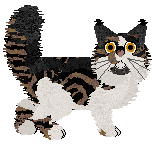
Ch. Nightwish Heatwave
Rolo
A260627017
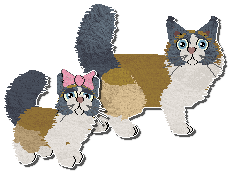
Ch. Parody Dream World
Lia
A260305062
Notes
The Siberian, Russia’s native forest cat, first appeared in recorded history around the year 1000 and hails from the unforgiving climate of Siberia. This is a cat that nature designed to survive, with no extremes in type. It is the cobbiest of the three forest cat breeds, intended for the coldest climate and harshest winters. A fat pad on the abdomen, referred to as a “famine pouch”, helps them survive the lack of prey in winter. The unique triple coat is extremely dense, with soft downy undercoat tightly packed under thick, coarse guard hairs to trap heat. Although the Siberian was mentioned in nineteenth-century cat books, it was not shown outside of eastern Europe until the end of the Cold War; the first Siberians arrived in the United States in June 1990, and were accepted for championship showing by CFA in 2006.
The Siberian’s coat is actually low-allergenic; studies have shown that Siberians have a gene that causes more than half of purebred Siberians to produce less Fel-d1 allergen than North American random-bred cats, with a significant percentage producing so little that they are considered safe to live with people extremely allergic to cats. Although they are not guaranteed to be hypoallergenic, a Siberian that tests low for Fel-d1 is an excellent choice for a cat lover with allergies.
Type & Judging Remarks
The Siberian is a medium to medium-large cat, strong and triple-coated with surprising heft for its size. The overall appearance should be one of strength, presence, and alertness with a sweet expression. The general impression is one of roundness and circles rather than rectangles and triangles. The head is broad and short-muzzled, with a heavy body set low on thick legs. Strong colours and clear patterns are desirable.
Breed Files
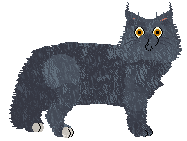
Divine Addiction
Filename: SiberianOffset: 9999
Base: Tabby
SCP: Tabby
Accepted: April 27, 2007
Notes: Addballz fur details and tail (4 carriage variations). Optional eartufts. Includes eyebrow whiskers.
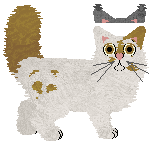
Paranoia
Filename: SiberianPOffset: 08BE
Base: Persian
SCP: Persian
Accepted: August 4, 2004
Notes: Comes with or without ear tuffs, and two collar ruff sizes (bigger ruff uses plush texture).
