
Burmese
General
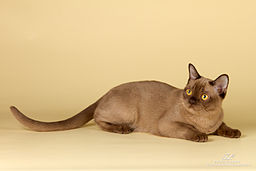
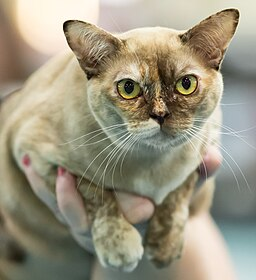
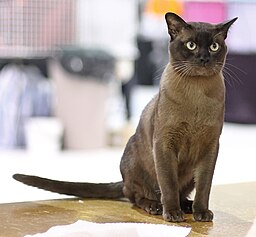
Burmese, also known as sepia, is a colour related to Colourpoint and Mink. It is the darkest of the three, with the points and body colour being very similar, making the cat look almost solid-coloured. Unlike it's sibling colours, Burmese does not affect eye colour, and Burmese-coloured cats can have any eye colour specified in the breed's standard.
The Point Pattern
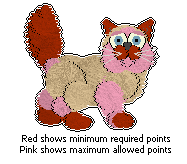
Burmese-coloured catz use the pointed pattern, which is as follows:
- Tail: Point coloured. The ball closest to the body may be the colour of the body
- Muzzle/mask:
- Minimum point colour: Jowls, snout. White spotting may cover and hide parts or all of the mask
- Maximum point colour: Chin, jowls, snout, cheeks, with blaze or patch between the eyes to complete the mask. White spotting may cover and hide parts or all of the mask
- Ears: Always point coloured
- Feet:
- Minimum point colour: Forelegs up to but not including the wrist, hind legs up to but not including the hock. White spotting may cover and hide parts of the point pattern on the legs
- Maximum point colour: Forelegs up to but not including the shoulder, hind legs up to but not including the full knee. Paintballz may be placed on the knees to get a gradual effect. The exception is if the knee is placed very high on the file - the point colour should not appear to continue from the legs up on the main body. White spotting may cover and hide parts of the point pattern on the legs
For colours other than solid, the first colour is the base colour and the second colour is the point colour.
Black (seal/sable) burmeseSolid


 with
with  points
with points
Chocolate (champagne) burmese
points
with points
Chocolate (champagne) burmese
Solid
 with points
Cinnamon burmese
with points
Cinnamon burmese
Solid

 with
with  points
Blue burmese
points
Blue burmese
Solid


 with points with points
Lilac (platinum) burmese
with points with points
Lilac (platinum) burmese
Solid
with points
 with points
Fawn burmese
with points
Fawn burmese
Solid
with points
with points
Red burmese
Solid


 with points
Cream burmese
with points
Cream burmese
Solid
with points
with points
When the same solid colour is used on the body and points, a different texture, such as plush or mottled5, can be used on the points to darken them. Different indexes may also be used - for example, 40 on the body, and 49 on the points.
Body shading
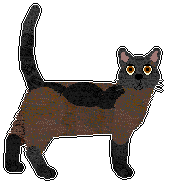
A solid/self burmese may use the dark point colour as shading on the upper side of the body. Only solid/self burmeses (not including tortie) may have this, and it is optional and not required. Please note that solid/self here refers to the cat being solid coloured genetically, as opposed to tortie/tabby/etc, and not solely the solid colour options in the point pattern section above.
Tortie burmese
Tortie burmese is accepted in breeds that come in both burmese and tortoiseshell. No visible point pattern is required, however it is preferred and more realistic that the point pattern is visible; in particular, the black-based point colour is often obviously lighter on the body in real-life burmese cats. Refer to the tortie doc for information on the tortie pattern and its rules.
When a point pattern is present, either both red-based and black-based areas can use a permitted body colour for their colour of burmese, or only the black-based areas can, with the red-based area the same colour on the points and the body.
For instance, a black (sable/seal) tortie burmese cat with a and tortie pattern on the points can use:
- and in a tortie pattern on the body
- or or and in a tortie pattern on the body
- or or and in a tortie pattern on the body
Whatever combinations used, the black-based colour on the body must not be darker than the black-based colour on the points, and the red-based colour on the body must not be darker than the red based colour on the points.
The colours below illustrate the colours allowed on the tortie pattern on the points. The tortie pattern on the body follows the rules detailed above, depending on the colour of the cat.
Black (sable/seal) tortie burmese
with
Chocolate (champagne) tortie burmese
with
Cinnamon tortie burmese
with
Blue tortie burmese
with
Lilac (platinum) tortie burmese
with
Fawn tortie burmese
with
Tabby burmese
Tabby burmese is accepted in breeds that come in both burmese and tabby. A burmese tabby has tabby points and tabby on the body, but the tabby stripes are less visible on the body. The tabby pattern, on both the points and the body, follows the pattern outlined in the tabby doc.
Tabby burmese use any of the accepted tabby combinations from the tabby doc on the points, and then the body has the same base colour as the points do, with either transparent striping or striping that is a lighter related colour than the striping on the points.
For example, a black (sable/seal) tabby burmese with base and striping on the points can use:
- Transparent striped on the body
- with or striping on the body
is also an accepted striping colour on the points in black (sable/seal) tabby burmese. Silver/golden tabbies also follow the same point and body pattern rules as described above.
Tabby burmese may have light markings - please refer to the tabby doc for the allowed colours and placements. Light markings must be either the same colour or lighter than the base colour of the tabby on the body, and they must be one uniform colour on the body and the pointed areas.
Torbie burmese
Torbie burmese combines a black-based tabby burmese with a red-based tabby burmese in patches all over the cat. Allowed torbie combinations are listed in the torbie doc. The tabby pattern on the points and body follows the pattern for tabby burmese above, with the following additional combinations allowed for the red-based tabby patches on the body:
- Red tabby areas can be diluted to with striping on the body
- Cream tabby areas can be diluted to with striping on the body
- Red and Cream silver/golden tabby must always have the base diluted to on the body
As with solid and tortie burmese, tabby and torbie burmese must not be darker on the body than on the points.
Torbie burmese may have light markings - please refer to the tabby doc for the allowed colours and placements. Light markings cannot be darker than the base colours of the tabby on the body, and they must be one uniform colour on the body and the pointed areas.
Smoke Burmese
As for above combinations, but using smoke furfiles. A darker furfile is used on the points, and a lighter on the body.
Examples
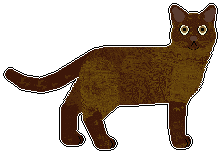
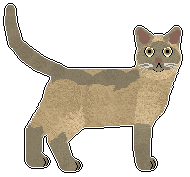
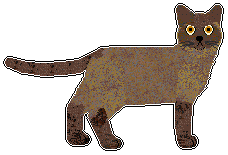
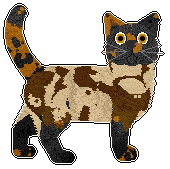
Below is a gallery of catz in the burmese pattern. Many more combinations than these are acceptable, this is just to provide some visual guidance to the text above.
 |
 |
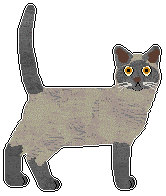 |
| A chocolate (champagne) burmese. Note than petz plush texture has been used on the points to darken them - this is optional in burmese cats that use the same solid colour on the body and points | A lilac (platinum) or fawn burmese with body shading | A lilac (platinum) burmese |
 |
 |
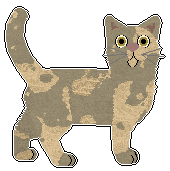 |
| A chocolate (champagne) burmese | A black (sable/seal) tortie burmese | A lilac (platinum) or fawn tortie burmese |
