
Coat: Brindle
General
Brindle is a pattern found only in dogs. It is a combination of black/red stripes, or any variation thereof (blue/cream, liver/tan etc). It is typically achieved using textures, but can also be done with paintballs. Allowed colour combinations will be mentioned in the standard. Unless otherwise mentioned, the stripe thickness may vary from thin to heavy.
The dog must be brindle all over, exception being masks and/or if the dog is tan-pointed and only the tan points are brindled (if allowed, this will be listed specifically in the standard). White cannot be brindled.
Below are some examples of brindle textures. Please bear in mind when using textures that some textures were only designed for specific fur types - for example, wirehaired textures for wirehaired breeds. If a texture used does not look realistic, either in pattern or for the fur type of the dog, then it may be declined for A-registration. Any questions on textures can be answered by a steward, so don't be afraid to ask!
 |
 |
 |
 |
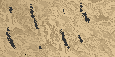 |
| A black-based brindle texture with very sparse striping | A black-based brindle texture with very heavy striping | A black-based brindle texture with an even amount of striping to base colour | A black-based brindle texture for use in longhaired dogz | A black-based brindle texture for use in wirehaired dogz |
Paintball Brindling
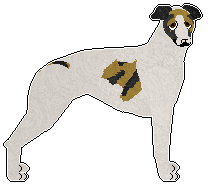
It is much easier to use textures for brindle dogz and the result is more likely to be realistic and A-registerable, but paintballz may be used to create brindles. The pattern must be clearly recognizable. Below is an example of a brindle done with paintballs.
Brindle Merle
 |
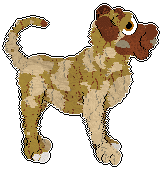 |
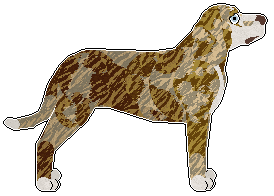
| A red brindle merle with white in the irish spotting pattern | A red brindle merle with white in the trim pattern and a standard mask - the mask is also merled |
Brindle merle is a combination of the brindle and merle patterns, which results in a dog that looks like the above. The striping will be a mix of the regular brindle striping colour and a merling colour accepted for that pigment type - for example, in a black brindle merle, a dog would have a mix of black and either blue or grey striping, over a red-based base colour, such as red, tan or cream.
The base colour may remain the same colour under both of the striping colours, or, underneath the lighter striping colour, the base may be a lighter shade or lighter related colour of said base colour. The dogs above are examples of the base colour being a lighter related colour on the merling/the lighter striped areas.
The stripes must always appear darker than the base colour no matter what colours are used. Please refer to individual breed standards to see if brindle merle is an accepted pattern in that breed.
Examples
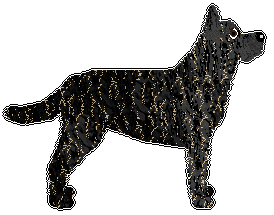
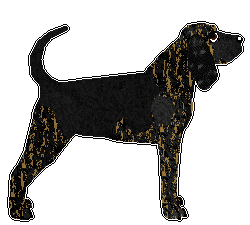
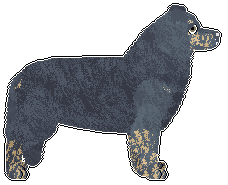
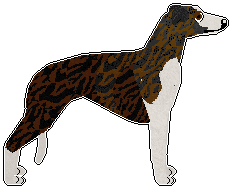
Please note that the brindling shown in all of the examples below has been achieved with textures, rather than paintballs. Examples of dogs with brindle striping present on the tan points are also shown - please refer to individual breed standards to see where brindle tanpoints are accepted.
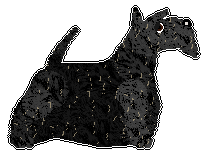 |
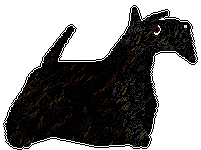 |
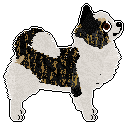 |
| A black brindle dog with heavy striping | A black brindle dog with heavy striping | A black brindle dog with medium-heavy striping, tan in the traditional pattern, white in the blanket pattern and a standard mask |
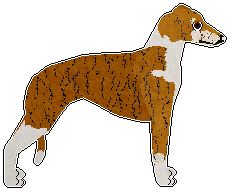 |
 |
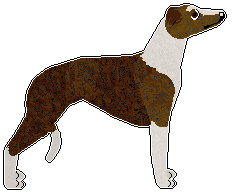 |
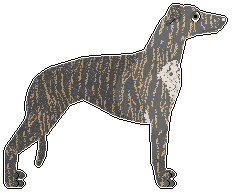
| A black brindle dog with sparse striping, urajiro and white in the irish spotting pattern. Note that the black striping persists over the urajiro affected areas; urajiro only affects the red areas of a dog, so the black striping remains the same whilst the red base is bleached | A blue brindle dog with medium-heavy striping, with white in the trim pattern and pigment spotting on the white | A black brindle dog with sparse striping and white in the irish spotting pattern |
 |
 |
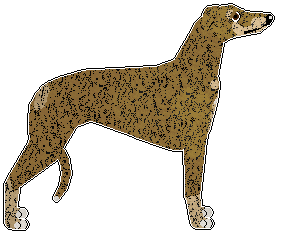 |
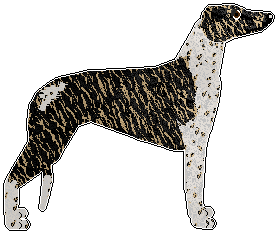
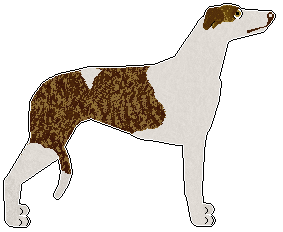
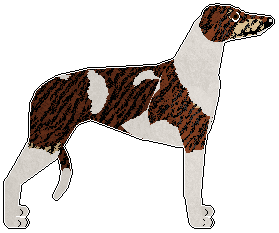
| A black brindle dog with medium striping, white in the irish spotting pattern and medium ticking on the white. The brindle pattern is present on the ticking spots - brindle ticking textures are used to achieve this | A liver brindle dog with medium striping and white in the blanket pattern, with a standard mask | A black brindle dog with sparse striping, urajiro and white in the trim pattern. Note that the black striping persists over the urajiro affected areas; urajiro only affects the red areas of a dog, so the black striping remains the same whilst the red base is bleached |
 |
 |
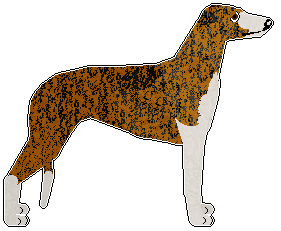 |
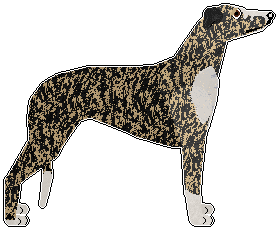
| A black brindle dog with medium striping, urajiro and white in the piebald pattern. Note that the black striping persists over the urajiro affected areas; urajiro only affects the red areas of a dog, so the black striping remains the same whilst the red base is bleached | A black brindle dog with medium striping, white in the irish spotting pattern, a standard mask and pigment spotting present on the white on the front of the chest | A black brindle dog with medium striping and white in the irish spotting pattern. A second brindle has been used to show a higher density of striping at the top of the dog's back and ears |
 |
 |
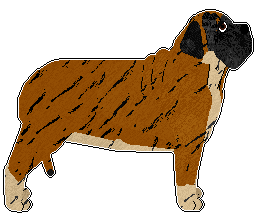 |
| A black brindle dog with heavy striping and a standard mask | A solid black dog with tan in the saddle pattern with heavy brindling present on the tan markings, and a standard mask | A black brindle dog with sparse striping, urajiro and an extended mask. Note that the black striping persists over the urajiro affected areas; urajiro only affects the red areas of a dog, so the black striping remains the same whilst the red base is bleached |
 |
 |
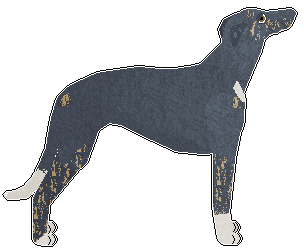 |
| A solid blue dog with tan in the standard pattern with medium brindling present on the tan markings | A black brindle dog with white in the irish spotting pattern and a standard mask | A solid blue dog with tan in the standard pattern with medium brindling present on the tan markings, and white in the trim pattern |
