Otterhound
Coat
Solid:


Tan:
 with in the traditional, creeping, or saddle pattern. Saddle tan may be grizzled.
 is also allowed as a solid colour or as tan markings in any of the patterns, but is not preferred.
White Markings:  allowed on any of the above except in the trim, piebald, or extreme spotting pattern (relaxed for all).
Ticking/Roaning: Roaning is accepted.
Eyes
 in black-nosed dogz.

 in others.
Nose

Dogz with liver () may have 
Dogz with blue ( ) may have 
Solid tan dogz ( ) can have any of the above nose colours.
A slight butterfly nose is allowed for all.
Faults
Wrong eye colour.
Wrong nose colour.
Note that in this breed can represent either liver or grizzle. Livers should have liver noses and amber eyes, grizzles should have black noses and brown eyes. Similarly, may represent blue or faded black.
Disqualifications
Liver and white dog.


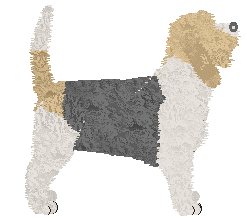
Notes
Otter hunting is a very old tradition, and the otter dogs, possibly related to the ancient great white Talbots, hunted in large packs. The Otterhound is believed to be related to the Bloodhound as well as the Airedale Terrier, and when it was bred to fit that standard that in the late 1800s, the French breed Griffon Nivernais, as well as wirehaired foxhoundS, were bred in. Because they were kept in large packs, the dogs were not individually registered, and many of the dogs were put to sleep when otter hunting became illegal in 1978, as many breeders did not have any further use for them. Fortunately, the breed was saved and is usually kept as a companion dog today, though it can sometimes be rather wild and clumsy!
The Otterhound should be large, coarse and healthy with a scruffy coat and friendly temperament. The head is large, deeper than it is broad, with moderate stop and powerful muzzle. A light moustasche and beard. The ears are a trademark of the breed, long enough to reach the tip of the nose if stretched out, well covered in fur. The neck is long and powerful. Deep oval chest and powerful, straight back. Good amount of angulation in the legs. The tail is set high, carried high or hanging. It should be long enough to reach the hock and well covered in fur. The coat is rather long, thick, scruffy and hard but not wirey, and water resistant.
Breed Files
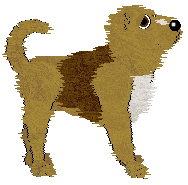
PDH's Resources
Filename: PDHotterhoundOffset: 4004
Base: Dalmatian
SCP: Dalmatian
Accepted: January 4, 2006
Notes: Check saddle before registering. In dane pose, the ears clip through the head at the highest breathing point - this should not be penalised.
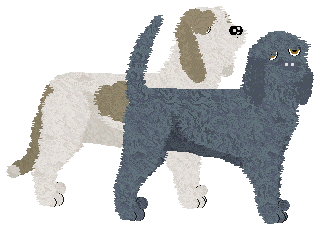
Java
Filename: CS OtterhoundOffset: 78E2
Base: Sheepdog
SCP: Sheepdog
Accepted: October 22, 2004
Notes: Addball ears and three types of addball tail (straight up, bent slightly or droptail). Angled legs - may have problems performing obedience. The movements are good but the sit is a bit off. Has variations in body and face feathering.
